Two centuries
One of the oldest structures in St. Thomas.
Located on Walnut Street and surrounded by a graveyard dating back to 1819, the churchyard is the final resting place of many generations of Anglicans in St. Thomas. It is considered an early example of North American pioneer architecture.
The Old St. Thomas Church was founded on land donated by Captain Daniel Rapelje, the founder of St. Thomas.
Daniel Rapelje (1774–1828), an American who came to Upper Canada in 1802, became a captain of the 1st Middlesex Militia after serving in the War of 1812. Following the war he built a grist-mill which attracted new settlers to the area. In 1821 he donated two acres of his original land grant for a church building and a burial ground for Anglican adherents. He had already buried two sons on the site by 1819.
The church was constructed with bricks made in the Kettle Creek Valley between 1822 and 1824, with a tower, steeple and chancel added in 1825 — financed by a donation from Col. Thomas Talbot. As one of the earliest churches in the area, the congregation relied on visiting missionary ministers of different denominations until a permanent rector could be secured.
The most important visiting minister was Rev. Charles James Stewart (1775–1837), who spent much of his career helping to establish the Anglican church in southwestern Ontario. He arranged the first Holy Communion here on June 19, 1825. Though Stewart became Bishop of Quebec in 1826, he returned to St. Thomas often.
The church’s first incumbent was Rev. Alexander Mackintosh, a missionary deacon who served from 1824 to 1829 and was also the village’s schoolmaster. The congregation began with only 12 parishioners in 1825 but grew to 41 by 1827. The church was consecrated in 1833 and served continuously until 1877, when Trinity Church opened. The 1824 building then served as a Sunday school, losing its bell to Trinity.
In the 1840s the church was extended to the south and transept galleries and a vestry were added. The pulpit was relocated to the junction of the nave and transept.
The interior is characterized by simple white walls and box pews, called ‘family pews.’ The galleries have simple wainscoting panels of dark wood. The transept and sanctuary walls have ogee-arch windows with wood muntins of intersecting tracery and small quatrefoils. The exterior walls of the nave are rendered with white stucco over brick. The tower is wood-frame with white clapboard. The very tall and slender octagonal needle spire rises above the crenellated tower, clad with slate shingles.
History written by Heather Jackson, April 2024
The record
Nineteen moments, 1810 to 2024.
1810
Rapelje settles the land
Captain Daniel Rapelje settles Lot 1, Concession 8 Yarmouth — also known as Lot 46, South Talbot Road.
1817
A village gets its name
St. Thomas is adopted as the village name. Earlier names included Kettle Creek, Kettle Creek Crossing, and Sterling.
1819
Two sons buried
Two of Daniel Rapelje’s sons die only months apart. He buries them in the most beautiful corner of his own land — the first graves on this ground.
1821
Land deeded for a church
In August, Rapelje conveys two acres of his original land grant for a church building and an Anglican burial ground, so his sons might rest in consecrated earth.
1822
Building begins
A meeting at Drake’s discusses building the church. The Hon. and Rev. Charles Stewart visits and reports that a fine brick building is almost complete. Bricks were made in the Kettle Creek Valley.
1824
Dedicated and opened
The church is dedicated and regular services begin. Rev. Alexander Mackintosh, a missionary deacon and the village schoolmaster, is appointed as first incumbent.
1825
Tower, steeple and chancel
The tower, steeple and chancel are added, financed by a donation from Col. Thomas Talbot. On June 19 the first Holy Communion is celebrated, arranged by Rev. Charles Stewart.
1833
Consecrated
The congregation had grown from 12 parishioners in 1825 to 41 by 1827. The church is formally consecrated.
1850s
Enlarged
The church is extended to the south. Transept galleries and a vestry are added and the pulpit is relocated to the junction of the nave and transept.
1877
Trinity opens
The congregation outgrows the building. Trinity Church is completed and the Old Church closes for regular services, becoming a Sunday school — and losing its bell to Trinity.
1894
First restoration
A group led by Charles Oakes Ermatinger undertakes the first effort to preserve the structure.
1920s
The floor caves in
At the conclusion of a service the floor gives way. A second restoration push follows, timed to the church’s 100th anniversary.
1931
The Masonic Window
Three Masonic Lodges in the St. Thomas area install the stained glass window above the altar at a cost of $175, creating the focal point of the sanctuary.
1948
The Lych Gate
Dedicated on September 13, donated by A.E. Maxwell as a memorial to his parents, and designed after the lych gates of English churchyards.
1984
The Trust is founded
After the steeple catches fire in the 1980s, community support surges. In January the Old St. Thomas Church Restoration and Maintenance Trust is established as a not-for-profit charitable corporation.
1988
Total restoration
A four-year, $400,000 restoration begins under the leadership of Dana Porter — new foundation, roof, trusses, windows, tower re-cladding, brickwork and plaster.
2000
The Scattering Garden
A scattering garden is planted, designed after those in England. All burial plots in the churchyard are now taken.
2022
Bicentennial
Two hundred years since construction began. The Trust has now overseen more than $1.5 million of restorative work.
2024
The organ sings again
The 1889 D.W. Karn reed organ is restored free of charge by Rodney Jantzi and reinstalled on March 23, in time for the bicentennial celebrations.
Longer stories
The bell, the organ, the Trust, and the art.
Cast 1838
The Story of the Bell
Its maker was apprenticed to Paul Revere.
Written by Heather Jackson
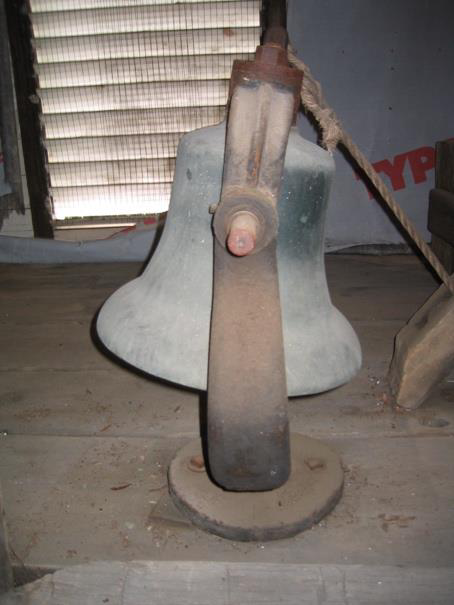
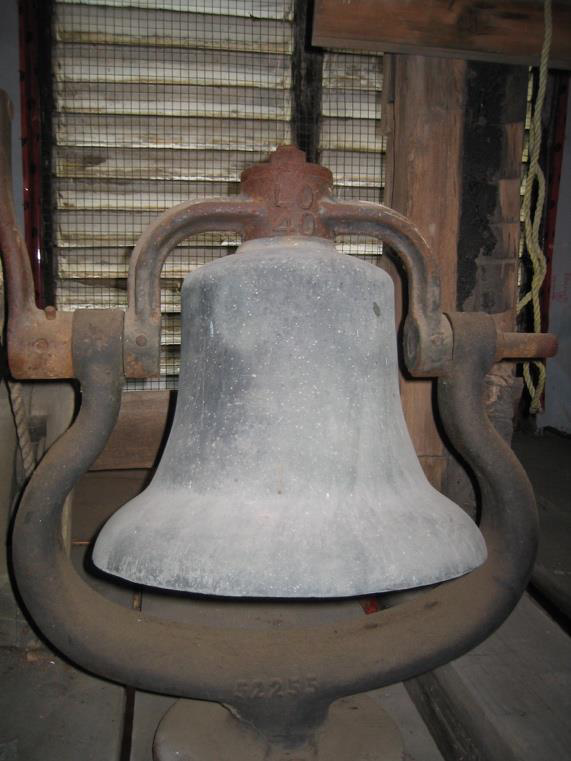
Among the church’s treasures is its original bell, cast in 1838 by Maj. George Holbrook Bells of Medway, Massachusetts. Weighing 500 pounds and measuring 28½ inches in diameter, it connects this small Ontario church to an illustrious lineage of American craftsmanship.
George Holbrook, born in 1767, was apprenticed to none other than Paul Revere — the legendary figure of the American Revolution, renowned for his midnight ride and his skills as a silversmith and bell maker. Under Revere’s tutelage Holbrook honed the machinist and clockmaker trades that would culminate in pieces like this one.
Installed here in 1838, the bell served its congregation faithfully until the town and the congregation outgrew the building. In 1877 Trinity Church was built and the Old Church closed for regular services.
Its journey was not over. In 2000, when Trinity Church closed its doors, the bell found a new home at the St. Thomas Islamic Centre, where it stands as a symbol of unity and resilience.
In 1951 another bell entered the scene, gifted by the family of a former engineer of the Wabash Railway Mikado Engine 2268. That is the bell which rings here today.
The Restoration and Maintenance Trust is now working to repatriate the original bell to its rightful place, guided by Verdin Bells, experts in the art of bell restoration.
Restored 2024
The Karn Organ
Silent since before the pandemic — and then a stranger offered to fix it for nothing.
Written by Heather Jackson
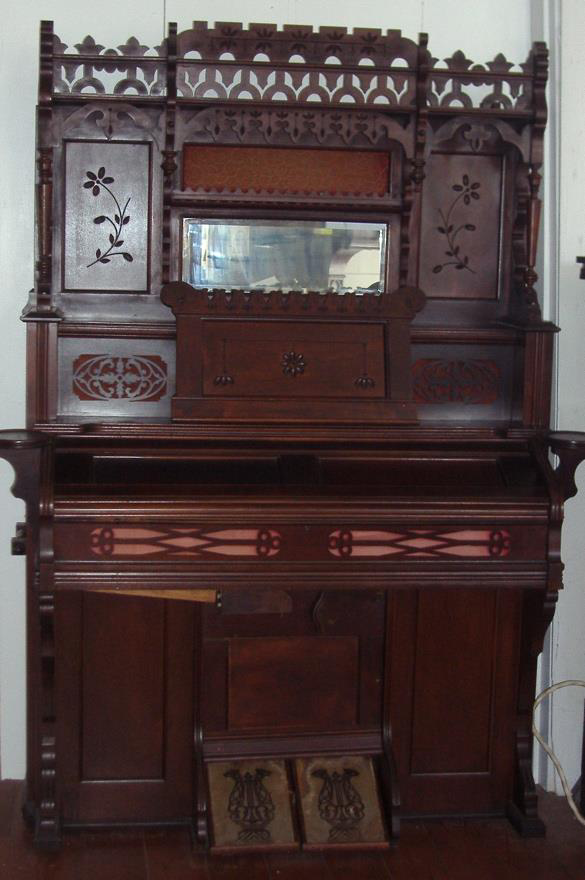
The church houses an 1889 D.W. Karn organ in its balcony, crafted by the renowned D.W. Karn Piano & Organ Company of Woodstock, Ontario. It is one of two organs in the church, but not the original — that instrument was transferred to St. John’s in London Township in 1877 and later destroyed.
The Karn organ was donated to the church in 1968 by Edith Topfner in memory of her late husband Josef Topfner, the church’s former caretaker. Karn’s company was a major player in the Canadian music industry, and Karn himself served as Woodstock’s mayor in 1889.
Designed as a dual-purpose instrument suited to both parlour and church use, the organ had fallen into disrepair: cracked bellows, worn leathers and felts, clogged reeds. It had been largely silent since before the COVID-19 pandemic.
In August 2022 Rodney Jantzi, an enthusiast and restorer of reed organs, visited the church and tried to play it. He found severe air leakage and numerous dead reeds.
Moved by a news article about the church’s nearly silent Christmas Eve service in 2023, Jantzi offered to restore the organ free of charge in honour of the 200th anniversary. The board accepted, and the organ went to his workshop on February 10, 2024.
It was installed back into its case on March 23, 2024, where organist Amadeusz Kazubowski-Houston played Elgar’s “Nimrod.”
Founded 1984
The Trust Story
Forty years, and more than $1.5 million of restorative work.
Written by Gail Ballard
The Old St. Thomas Church Restoration and Maintenance Trust was established as a not-for-profit charitable corporation in January 1984. Its purpose under the Letters Patent is the care and maintenance of the church and churchyard. The site is owned by the Incorporated Synod of the Diocese of Huron and is deemed a Chapel at Ease.
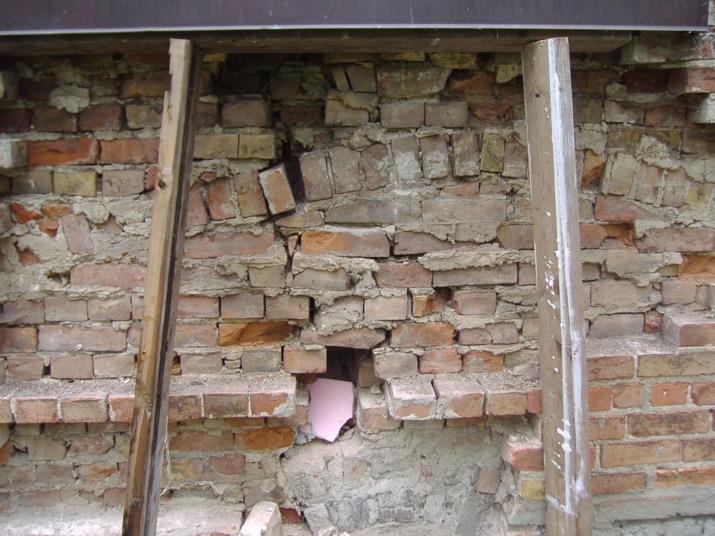
The building is an excellent example of vernacular Gothic Revival, with a metal-clad steeple surrounded by wooden crenellations on the tower and roof gables. The structure is load-bearing brick partially covered in stucco, with a post-and-beam roof, tower and spire.
The first restoration was undertaken in 1894 by a group led by Charles Oakes Ermatinger. In the 1920s, for the church’s 100th anniversary, another push followed after the floor caved in. By the 1930s the Masonic Window was installed. In 1948 the Lych Gate was added.
In the 1980s, after the steeple caught fire, a strong resurgence of community support was born. Money began to be raised and the Trust was established to ensure those funds were protected and used for the site. The Diocese hired Peter Stokes, a prominent historical architect from Niagara-on-the-Lake, to assess the building.
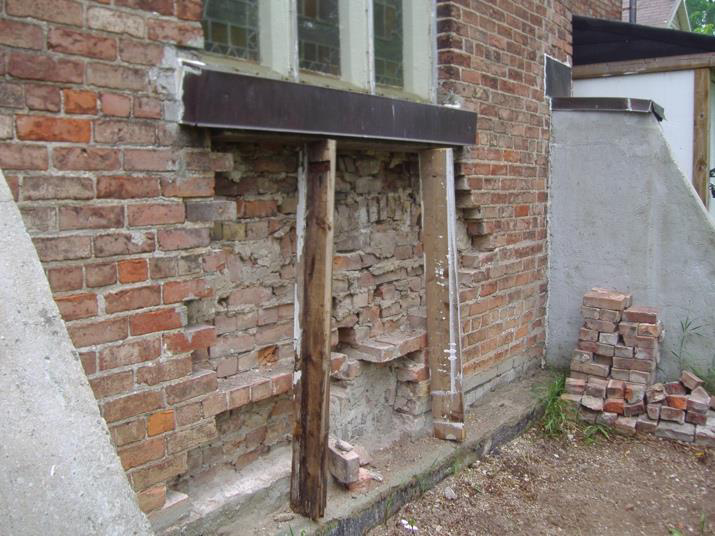
Over the past forty years the Trust has overseen more than $1.5 million of restorative work, including the total restoration of the building from 1988 to 1992 under the leadership of Dana Porter — a complete new foundation, roof repairs, truss repairs, window re-glazing, tower re-cladding, brick re-pointing, painting and plaster refinishing.
Since then the repairs have continued in cycles. Windows need painting, roofs need replacing, brickwork needs repointing, towers need re-cladding. It is always in need of continued care and maintenance.
The Old Church of St. Thomas is such a rare and precious example of an early church that everything possible should be done to maintain its integrity.
Peter Stokes, historical architect, in his initial assessment
Bicentennial, 2024
Celebrating History Through Art
The church as seen by the artists of its own town.
Written by Heather Jackson
To mark the bicentennial, the St. Thomas Elgin Public Art Centre hosted a special exhibition from August 17 to September 14, 2024, showcasing original artworks depicting the Old St. Thomas Church.
The call for submissions ignited a wave of creativity throughout St. Thomas and beyond. Artists of all ages and backgrounds were inspired to capture the spirit of the church on canvas — from seasoned painters to aspiring amateurs.
Among the works on display was “The Lych Gate, Old Church, St. Thomas” by renowned local artist Carolyn Curtis (1903–1995), a watercolour painted in 1950.
Through art we have the power to preserve the stories and memories that define us, ensuring the legacy of places like the Old St. Thomas Church continues to inspire generations to come.