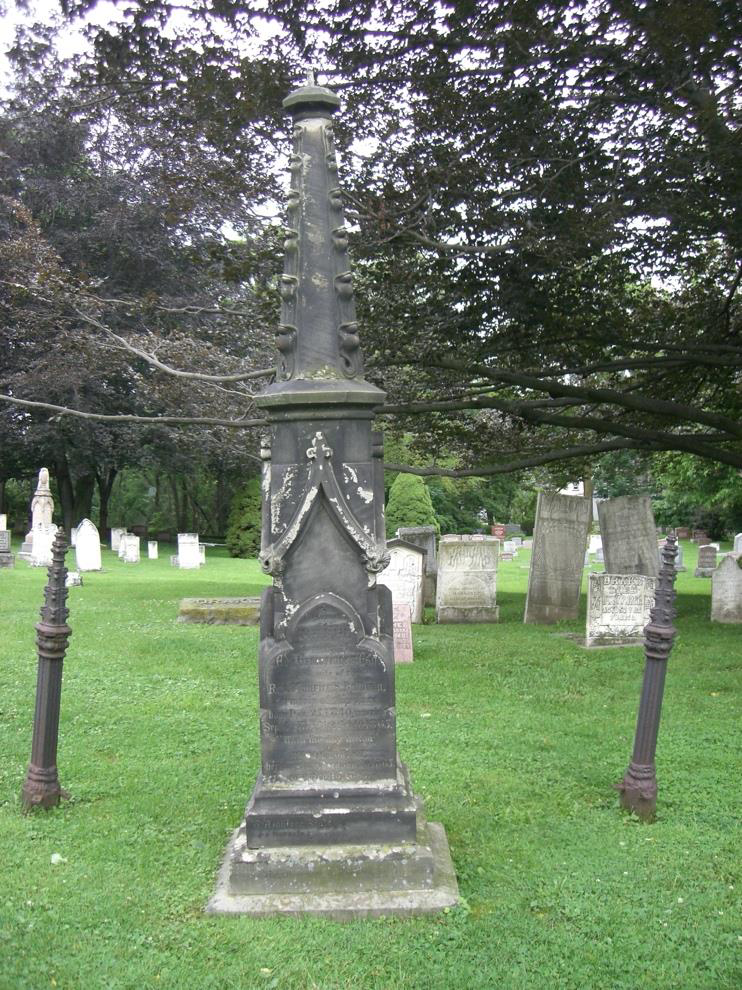
A guide to the carved symbols.
Visitors ask constantly about the symbols, pictures and initials carved into the headstones. This guide was written to answer them.
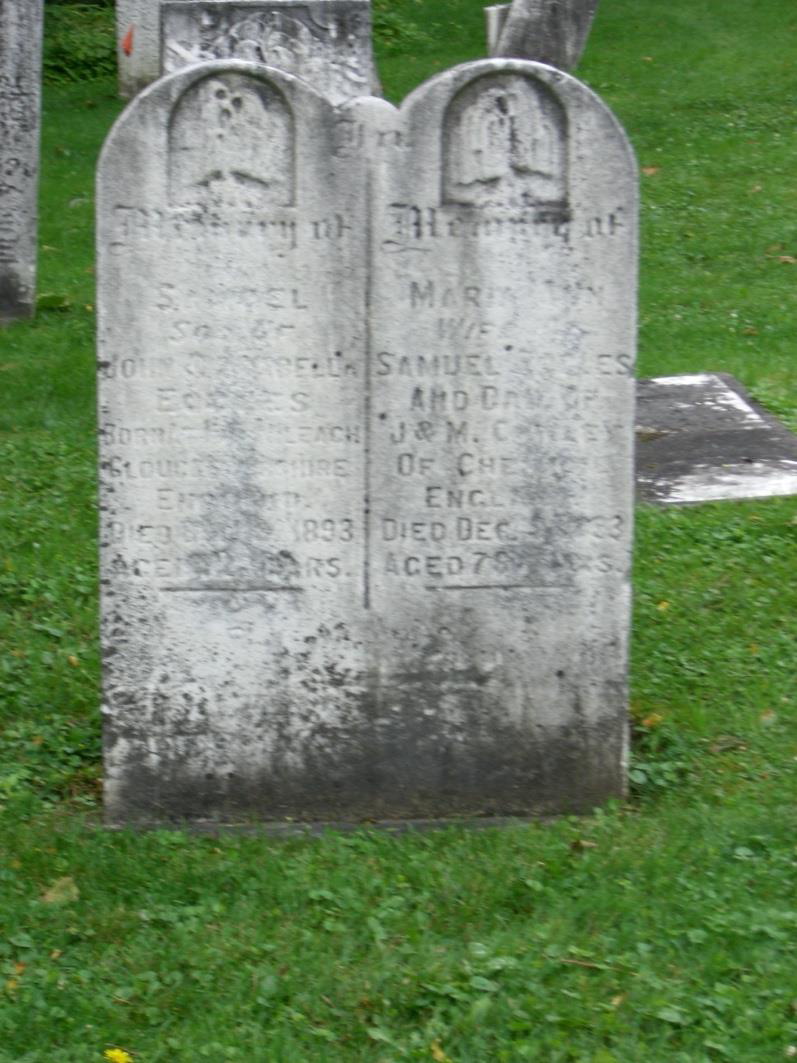
Mourning, grief, and nature’s lament. The most prominent symbol in this cemetery — Walnut Street was formerly lined with huge willow trees. Willows potted in an urn deepen the theme of grief. Seen on Hannah Eccles’ stone.
Innocence. Prevalent here because so many young children are buried in this ground. Seen on the George Smith stone.
The farewell between the departed and their loved ones, and sometimes the bonds of marriage. Blooming roses on either side speak to the brevity of earthly existence. Seen on the Thomas Kennedy stone.
Purity, devotion, and resurrection; sometimes the Holy Spirit. Seen on the stones of Charlie W. and Louisa Tucker.
The brevity of life. A rose in full bloom represents the prime of life; a nipped rose a shortened one, usually a child or infant. Seen on the John and Sarah Allworth and Jonathan Mitchell stones.
Scottish descent, and remembrance. One of only a few examples in this cemetery, on the Thomas Hutchinson stone.
Either the Bible itself, or that the person was a teacher or a minister. Sarah Vail’s stone shows an open book flanked by two weeping willows.
Immortality. An urn with a wreath or surrounded by plants signifies mourning; an urn with a blaze means undying friendship and remembrance. Drapes represent mourning or mortality.
A trumpeting angel means resurrection; a flying angel resurrection or rebirth; a weeping angel grief and mourning, as on the Fred Couse stone. Angels are said to guard the tomb of the deceased.
The glory of life after death, and reward. One of only two examples here, on the Mary Jane, Matthew and Elizabeth Cole stone.
Victory in death, and saintliness. On Eliza Nicolls’ stone a wreath of roses appears with shaking hands.
A hand pointing upward shows the pathway to heaven. Palm leaves signify rejoicing and victory, and have also represented martyrdom. Seen on the Edward Mihell stone.
Either the Independent Sons of Honour, or the first three letters of Jesus’ name in Greek. The flowers stand for sorrow, grief, condolence, and the fragility of life. Seen on the cross-shaped George Crimes stone.
A white bronze monument near the church entrance carrying four symbols, one per side: the anchor for hope or a seafaring profession, wheat sheaves for the divine harvest, a husk of corn for ripe old age, and the cross as an emblem of faith.
Gravestone Pictures and their Meanings, by Jenny Olivier and Carrie Kernohan, summer students, 2007.